A reading from the gospel according to Luke 11:42-46
The Lord said:
42 “Woe to you Pharisees! You pay tithes of mint and of rue and of every garden herb, but you pay no attention to judgment and to love for God. These you should have done, without overlooking the others.
43 Woe to you Pharisees! You love the seat of honor in synagogues and greetings in marketplaces.
44 Woe to you! You are like unseen graves over which people unknowingly walk.”
45 Then one of the scholars of the law said to him in reply, “Teacher, by saying this you are insulting us too.”
46 And he said, “Woe also to you scholars of the law! You impose on people burdens hard to carry, but you yourselves do not lift one finger to touch them.”
Reflection: What Jesus wants of us and what He does not want of us
The gospel reading above shows us how Jesus strongly rebuked the Pharisees, the people of authority who were supposed to be the bearers of truth and goodness. Yet, Jesus likens them to unseen grave, a dark and smelly place. Imagine yourself being told how unclean or filthy you are. How insulting, isn’t it? Yet, this is actually what Jesus was telling the Pharisees that their lives were not admirable or exemplary as they thought but obnoxious and rotten to the core.
Jesus enumerates what are despicable in the lifestyle of the Pharisees: hypocrisy in giving tithes, self-importance, propensity to draw attention from others, and lack of compassion for the poor. They pay tithes for sure but they were also extortionist (Matthew 23:25). They always wanted to be seen and be respected. With all their human regulations and man-made requirements, the people were driven to deeper poverty and even choked to death. Still, they don’t go out to help the needy.
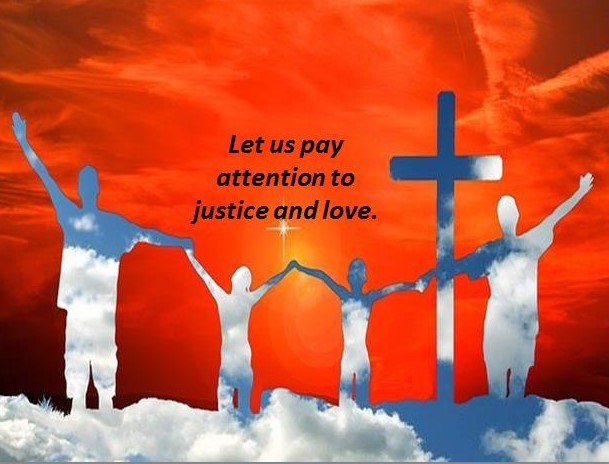
What Jesus wants of us is to pay attention to justice and love. He wants us to serve the poor and not oppress them. By scolding the people of authority, Jesus fought for this marginalized sector of society. Let us do the same thing. Let us not keep quiet when there is injustice. Let us be courageous servants and bearer of the light no matter how dark and dangerous the environment is.
Lastly, when the Pharisees and lawyers were scolded, they felt insulted which escalated the hostility between them and Jesus. If they were humble enough, they should have taken the rebuke lightly and repented. Indeed, taking correction for a mistake is quite difficult but when we put down our ego, being corrected is rewarding.
*****
Jesus confronts the Pharisees and teachers of the law, rebuking them for prioritizing minor religious details over justice and love. He exposes a critical issue: the Pharisees were meticulous in following ceremonial laws, such as tithing even the smallest herbs, but they neglected the greater commandments — justice, mercy, and love. This passage challenges us to consider the focus of our own spiritual lives and the balance between religious practices and the heart of God’s commandments.
The Pharisees’ focus on tithing garden herbs — something as insignificant as mint and rue — reflects a common temptation in religion: getting caught up in the minutiae while missing the heart of God’s will. Jesus doesn’t criticize them for tithing, but He emphasizes that they neglected the weightier matters of the law: justice and love. In essence, they missed the forest for the trees.
This is a warning for us not to reduce our faith to a checklist of religious duties. While discipline in our faith practices is important, we cannot allow it to overshadow the fundamental call to love God and others. The Pharisees were careful to obey small commandments, but their hearts were not aligned with God’s love and compassion.
Jesus’ rebuke underscores that justice and love are at the core of God’s law. These are not just optional virtues but the essence of true worship. When we prioritize justice, we reflect God’s righteousness by standing for what is right and defending the oppressed. When we prioritize love, we reflect God’s own heart for humanity.
This message calls us to look beyond outward religious observance and focus on the deeper matters of our faith — seeking justice, showing mercy, and loving others with the love of God.
In our own lives, we are challenged not only to practice our faith externally but to ensure our hearts are aligned with God’s will. Let us not become so fixated on minor details of religious duty that we neglect justice, mercy, and love, the weightier matters that reflect God’s true heart.
As we reflect on this passage, may we strive to live out a faith that values love and justice as the core expressions of our devotion to God.
*****
In this passage, Jesus confronts the Pharisees and the experts in the law for their hypocrisy and misplaced priorities. They are careful to give a tenth of their herbs and spices but neglect justice and love for God. They enjoy public recognition but burden others with rules they themselves do not follow. Through these strong words, Jesus reminds us that outward religiosity means nothing if the heart is empty of compassion and sincerity. Faith is not measured by how perfectly we perform rituals but by how deeply we love and serve others.
Many people today still fall into the same trap. It’s easy to appear righteous like attending church services regularly, quoting Scripture, and following religious customs but Jesus looks beyond appearances. He sees our motives. Like the Pharisees, we can sometimes value order and tradition more than mercy. We can spend more time judging others than caring for them. Imagine a person who never misses Sunday service but gossips about their neighbor, or someone who gives generously to charity but treats their employees harshly. Jesus’ message exposes this contradiction. He invites us to move from external religiosity to internal transformation, from rules to relationship.
God desires hearts that are aligned with His love. The essence of faith is not in counting what we give but in how we give it. When we serve or help others, do we do it to be seen or because love compels us? True discipleship is rooted in humility and compassion. The Pharisees’ mistake was believing that following rules could replace genuine love for God and people. But Jesus teaches that justice and love are inseparable. Loving God means defending the oppressed, forgiving the guilty, feeding the hungry, and comforting the lonely.
In today’s world, where appearances and recognition are highly valued, it is tempting to perform our faith like a show. Social media allows people to display every good deed for approval and praise. Yet Jesus reminds us that God sees what is done in secret. The most powerful acts of love are often unseen such as listening patiently to a troubled friend, forgiving a hurt, or showing kindness to someone who cannot repay us. The measure of our faith is not how loud we proclaim it but how quietly we live it with integrity and grace.
Jesus also rebuked the experts in the law for placing heavy burdens on others while refusing to lift a finger to help. This is a warning for all who lead, teach, or influence others. True leadership in God’s Kingdom is not about control but about service. We should guide others with compassion, not condemnation. There is no place in Christian life for arrogance or superiority. Every believe, whether a leader or a follower, is called to walk humbly with God, recognizing that all of us need mercy.
If we want to please God, we must examine not only what we do but why we do it. Are our words encouraging or condemning? Do our actions bring healing or harm? Do we help lighten others’ loads or make them heavier? Jesus calls us to live with authenticity, to let our faith flow from love, not obligation.
When our hearts are pure, our actions naturally honor God. When love motivates us, justice becomes our passion, and humility our strength. The world doesn’t need more people who appear holy; it needs hearts that reflect God’s mercy and truth. Let us then live our faith with sincerity, loving God with all our being and showing that love through compassion, fairness, and service. In doing so, we not only honor Christ’s teaching but also bring light to a world that desperately needs it.