A reading from the gospel according to Matthew 7:21, 24-27
Jesus said to his disciples:
21 “Not everyone who says to me, ‘Lord, Lord,’ will enter the Kingdom of heaven, but only the one who does the will of my Father in heaven.
24 “Everyone who listens to these words of mine and acts on them will be like a wise man who built his house on rock.
25 The rain fell, the floods came, and the winds blew and buffeted the house. But it did not collapse; it had been set solidly on rock.
26 And everyone who listens to these words of mine but does not act on them will be like a fool who built his house on sand.
27 The rain fell, the floods came, and the winds blew and buffeted the house. And it collapsed and was completely ruined.”
Reflection: Doing the will of the Father
There are three wills of God. First is the general or the revealed will. We know His will because He said it so through the scripture. Second, His secret will for the world. No one knows His will until it comes to pass. Third is His specific will for our individual life.
The revealed will is the salvation of everyone and completion of His Kingdom where He is glorified by all of His creation. It is His will that we follow His precepts and that His message of salvation is heard all over the world. It is His will that we abide in Him through prayers and service.
The secret will of God is hidden from us. No one knows what will happen to the world tomorrow and next year. No one knows when the end of the world will come to pass. Likewise, no one can really tell us what time or day will we breathe our last.
The specific will of God for our life is our personal mission. God has given us specific tasks to be accomplished within our lifetime. It is not given to anyone but only to us as individuals. If we listen enough through meditation, we can discern what He wants us to do for our life.
In the gospel above, Jesus is telling us to truly worship Him by doing the revealed will as well as our personal mission. Indeed, some people shout their love for the Lord and yet their actions are contrary to their words. Authentic worship is founded on love which is the greatest commandment. That is the truth and it is His will that we worship in spirit and in truth (John 4:23-24).
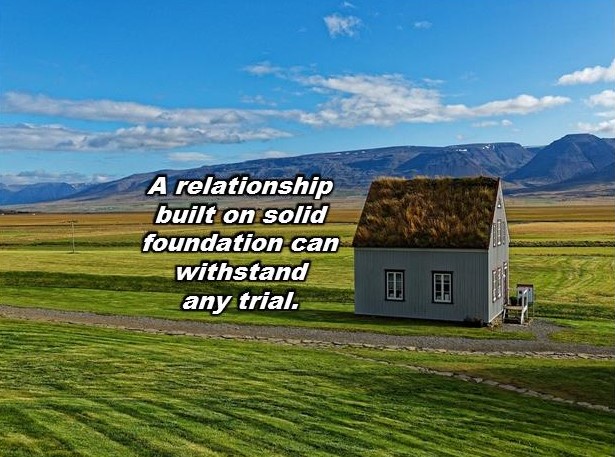
Jesus uses house as a metaphor for our life. If our life is deeply rooted in Jesus then we will be saved but if our life is based on worldly affairs and aspirations, then we will perish.
Let us do our best to live out the revealed will and let us trust God for his secret will for we know that He loves us and that He is working all things for the good of those who love Him (Rom. 8:28). This means total surrender to Him even as we encounter difficulties that really put our faith on the line.
*****
In the Sermon on the Mount, Jesus delivers a powerful challenge in Matthew 7:21, saying, “Not everyone who says to me, ‘Lord, Lord,’ will enter the kingdom of heaven, but only the one who does the will of my Father who is in heaven.” He follows this with the vivid parable of two builders — one who builds on rock and one on sand. This passage invites us to examine our lives and foundations, asking: Are we merely listeners, or are we doers of God’s Word?
The parable paints a picture of two men constructing homes. Both face the same inevitable trials—rains fall, floods rise, and winds blow. However, the outcomes differ dramatically. The house on the rock stands firm, while the one on the sand collapses.
What does it mean to build on the rock? Jesus defines it as hearing His words and putting them into practice. It’s not enough to acknowledge Christ or call Him “Lord” with our lips. True faith requires obedience. Our actions must align with His teachings, especially when they challenge our comfort or convenience.
Building on the rock means making Jesus the cornerstone of every aspect of our lives including our relationships, decisions, ambitions, and values. It’s about living with integrity, seeking justice, loving mercy, and walking humbly with God. These are the spiritual bricks that form a life that can withstand any storm.
Conversely, building on sand represents a shallow, superficial faith. It’s when we hear God’s Word but fail to act on it, prioritizing worldly pursuits over eternal truths. Sand shifts, and when trials come—whether financial crises, health challenges, or relational breakdowns—our lives crumble because the foundation is unstable.
Storms are a certainty. Jesus doesn’t promise a life free from hardships but assures us that with Him as our foundation, we can endure. When we root ourselves in His truth, we find peace amid chaos, hope in despair, and strength in weakness.
The question isn’t whether we’ll face storms, but whether we’ve prepared for them. Are we investing in a deep relationship with God, or are we content with a surface-level faith? Are we quick to forgive, generous in love, and faithful in prayer? These daily choices reflect whether we’re building on rock or sand.
Jesus ends this teaching with urgency, urging us to act now. Foundations aren’t visible once a house is built, but they determine its destiny. Similarly, our unseen spiritual foundation will dictate how we navigate life’s challenges and where we’ll stand in eternity.
Let this passage inspire us to assess and rebuild where needed. Commit to studying God’s Word not for knowledge alone, but for transformation. Seek His will and let His Spirit guide your steps. Build on the unshakable foundation of Christ, and no storm will overcome you.
Prayer:
Lord, help us not only to hear Your words but to live them. Guide us to build our lives on the solid foundation of Your truth, that we may stand firm through every storm. In Jesus’ name, Amen.